<< Back
HHC and American Ambulance Awarded Connecticut’s First Mobile Integrated Health Program
September 08, 2026
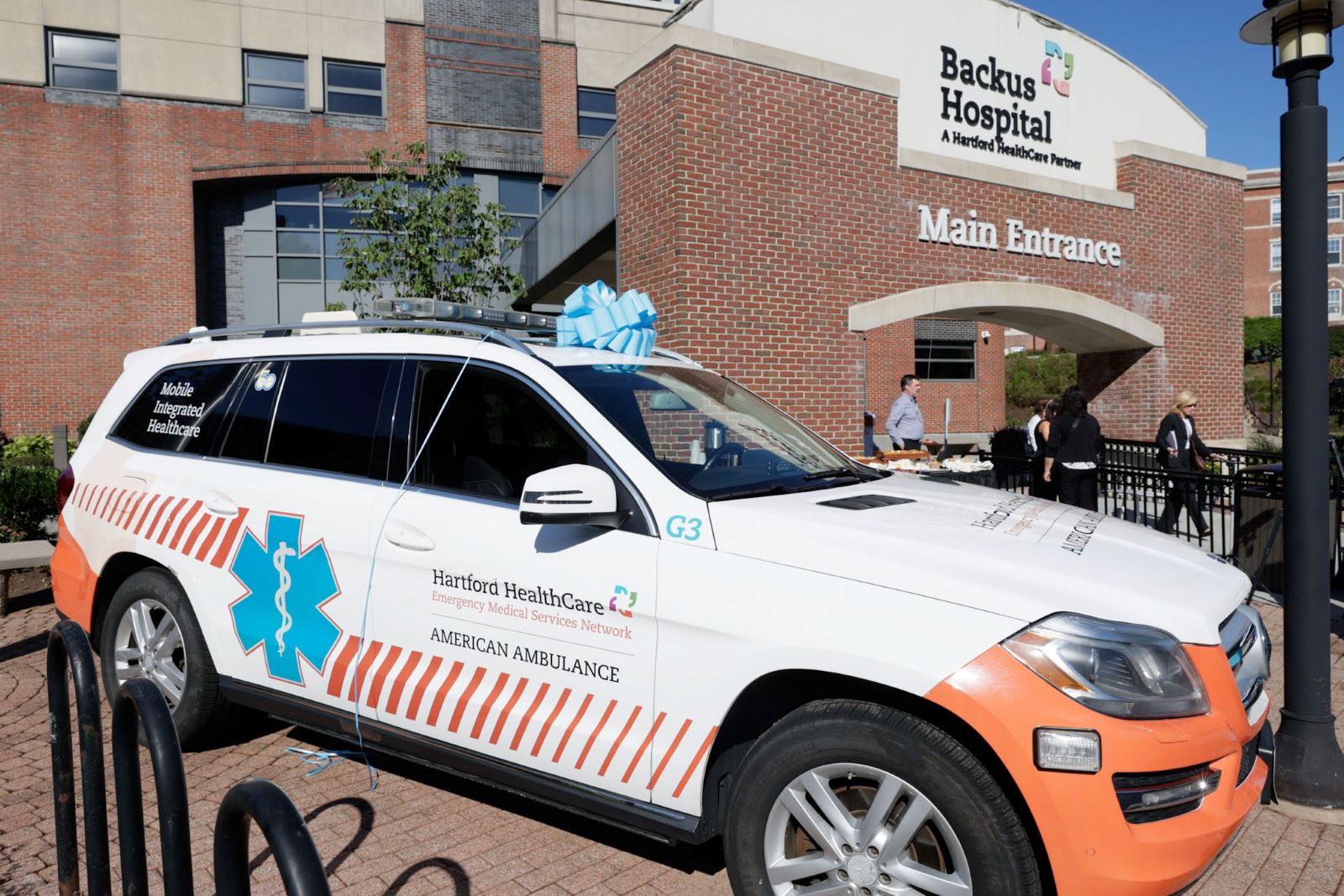
Hartford HealthCare and American Ambulance have been awarded the first Mobile Integrated Health (MIH) program designation by the state of Connecticut, marking a significant milestone in the evolution of community-based healthcare delivery across the state.
Mobile Integrated Healthcare is a patient-centered, community-based model that delivers medical services directly to individuals outside of traditional healthcare settings, most often in the comfort of their homes. The program utilizes specially trained mobile clinicians, including paramedics, nurses and other healthcare professionals, to address healthcare needs, improve care coordination and connect patients with critical resources and services.
The state designation recognizes Hartford HealthCare and American Ambulance for their shared commitment to innovative, accessible care that meets patients where they are and supports healthier communities.
“This designation reflects our ongoing commitment to delivering the right care, at the right time, in the right place,” said Hartford HealthCare President and CEO Jeffrey A. Flaks. “By bringing healthcare services directly into the community, we can improve access for vulnerable populations, strengthen care coordination and help patients avoid unnecessary emergency department visits and hospitalizations.”
The MIH program is designed to improve access to care for individuals with complex medical conditions, chronic illnesses, mobility challenges or other barriers that may prevent them from receiving timely healthcare services. Through in-home assessments, wellness checks, care coordination and referrals to medical and community resources, the program helps patients navigate the healthcare system more effectively while maintaining independence and quality of life.
“American Ambulance is proud to be leading this pioneering initiative,” said Eric Smullen, Senior Vice President of Hartford HealthCare’s Community Network. “Mobile Integrated Health represents the future of healthcare delivery by leveraging the expertise of our clinicians to provide proactive, preventive care beyond emergency response. Together, we are creating a more connected system of care that benefits patients, providers and the communities we serve.”
Key goals of the Mobile Integrated Health program include:
- Improving access to care, particularly for vulnerable and medically complex individuals.
- Reducing unnecessary emergency department visits and preventable hospital readmissions.
- Addressing both clinical needs and social determinants of health, including food insecurity, transportation challenges and home safety concerns.
- Supporting and integrating with existing healthcare providers, hospitals and community organizations rather than replacing them.
As healthcare systems nationwide seek innovative solutions to improve outcomes and reduce costs, Mobile Integrated Health has emerged as a proven strategy for enhancing care coordination, strengthening public health, and ensuring patients receive appropriate care in the most effective setting.
The Connecticut designation positions Hartford HealthCare and American Ambulance at the forefront of this growing movement, creating a model for healthcare delivery that is more responsive, efficient, and centered on the needs of patients and families.